Trauma & Fracture Care for Broken Bones, Accidents & Injuries
A sudden fall, road accident, sports injury or other trauma can cause a fracture, dislocation, severe sprain or damage to the surrounding soft tissues. Trauma and fracture care focuses on prompt assessment, accurate diagnosis and the right treatment to restore stability, movement and function. At Nishat Hospital, Lucknow, orthopedic care is tailored to the type and severity of the injury, from immobilization and follow-up to fracture reduction, surgery and rehabilitation when clinically required.
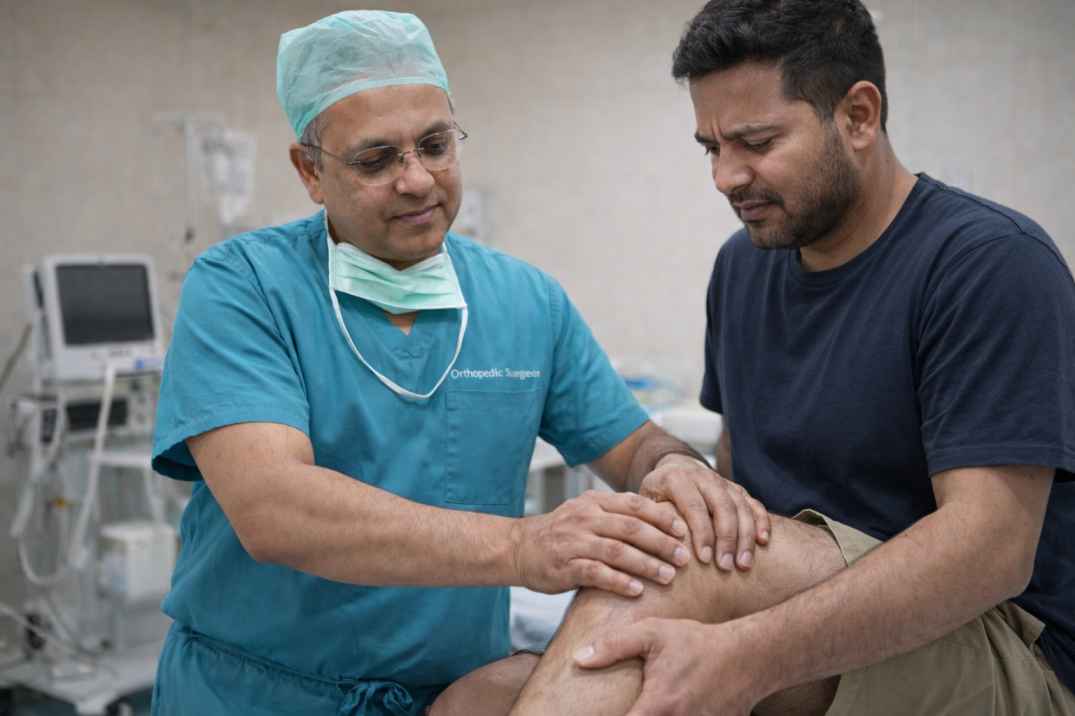
A suspected fracture should be assessed promptly.
Not every injury looks like a classic broken bone. Severe pain, swelling, bruising, inability to bear weight, restricted movement or an unusual shape can occur with fractures and other significant injuries. A clinical examination and, when appropriate, an X-ray or other imaging can help determine what has happened. Reliable patient guidance from the NHS information on broken bones also recommends medical assessment when a fracture is suspected.
The right fracture treatment starts with understanding the injury.
Was the injury caused by a fall, accident or direct impact?
Falls, road traffic accidents, workplace injuries and sports impacts can cause fractures, dislocations, ligament injuries and soft-tissue damage. Early orthopedic assessment helps identify the extent of the injury and plan appropriate care.
Is there severe pain, swelling, deformity or difficulty using the limb?
Marked pain, increasing swelling, inability to walk or use an arm, visible deformity, numbness or color changes can require urgent medical attention. Do not attempt to straighten a visibly deformed limb yourself.
Does the injury need more than basic first aid?
Some fractures can be treated with a splint, cast or protective support, while displaced, unstable, open or complex fractures may require reduction or surgery. Treatment depends on the individual injury rather than a one-size-fits-all approach.
The goal is safe healing, stable bones and a return to useful movement.
Fracture care does not end when the bone is placed in a cast or fixed surgically. Follow-up, protection of the injured area, appropriate weight-bearing, movement and rehabilitation can all be important parts of recovery. The American Academy of Orthopaedic Surgeons explains that casts and splints are used to support and protect injured bones while they heal; the exact approach depends on the fracture and the patient. Orthopaedic fracture information from AAOS can help patients understand general treatment principles.
Advanced Fracture Treatment & Bone Injury Management
Orthopedic traumas focuses on the diagnosis and treatment of bone, joint, muscle, spine, foot and limb conditions in babies, children and teenagers. From childhood fractures and sports injuries to clubfoot, gait problems, hip conditions and spinal concerns, specialist assessment helps determine the right care for a growing child.
Fracture treatment is planned around the injury, bone stability and recovery needs.
A child's bones and joints are still developing, so orthopedic care needs to consider age, growth, symptoms, movement and future function. A orthopedic trauma specialist evaluates the child's condition and recommends observation, rehabilitation, bracing, casting or surgery when clinically appropriate.
What type of injury has occurred?
The orthopedic team considers how the injury happened, pain, swelling, movement, deformity, circulation and sensation to understand the likely fracture or soft-tissue injury.
Which bone or joint is affected?
Trauma can affect the wrist, hand, forearm, elbow, shoulder, hip, thigh, knee, leg, ankle or foot, and may also involve the spine or surrounding muscles, ligaments and tendons.
Does the fracture need non-surgical or surgical treatment?
Not every fracture needs surgery. Depending on the injury, treatment may include a splint, cast, brace, protected weight-bearing or activity modification. Displaced, unstable, open or complex fractures may require reduction or surgical fixation.
A detailed assessment helps identify fractures and other bone injuries.
During an orthopedic fracture consultation, the specialist reviews how the injury occurred, symptoms, medical history and physical findings. Examination may include swelling, tenderness, movement, limb alignment, circulation and sensation. X-rays are commonly used for suspected fractures, while additional imaging may be considered for selected complex injuries when clinically necessary.
Assess the injury and symptoms
Severe or persistent pain, swelling, bruising, restricted movement, inability to bear weight or visible deformity can indicate a significant bone or soft-tissue injury and should be assessed clinically.
Check alignment, stability and surrounding tissues
The specialist may assess tenderness, deformity, joint movement, limb alignment, circulation and sensation to understand the severity and stability of the injury.
Create an individualized fracture treatment plan
Treatment is selected according to the fracture pattern, alignment, stability and the patient's clinical needs. Care may include immobilization, fracture reduction, surgical fixation, rehabilitation and follow-up.
What injuries are treated in trauma and fracture care?
Trauma and fracture services cover a wide range of injuries affecting bones, joints and surrounding tissues. Prompt assessment helps determine whether an injury needs immobilization, reduction, surgery, rehabilitation or specialist follow-up.
Upper & Lower Limb Fractures
Wrist, hand, forearm, elbow, shoulder, ankle, foot and leg fractures can occur after falls, road accidents, sports injuries or direct impact. Treatment depends on fracture alignment and stability and may include immobilization, reduction, fixation or rehabilitation. Explore orthopedic care at Nishat Hospital .
Joint-Related Injuries & Dislocations
Trauma can cause dislocations and injuries around the shoulder, elbow, wrist, hip, knee or ankle. A joint that appears out of position, has severe pain or cannot move normally needs prompt medical assessment. General information about broken bones and injuries is available from the NHS broken bone guidance .
Complex, Displaced & Open Fractures
Some fractures are displaced, unstable, involve a joint surface or occur with an open wound. These injuries may need specialist fracture management and, in selected cases, surgical fixation. The American Academy of Orthopaedic Surgeons fracture guide explains general principles of fracture treatment and recovery.
After a fall, accident or sports injury, patients often search for an orthopedic doctor near me or fracture treatment in Lucknow. When pain, swelling, deformity or difficulty using a limb continues after an injury, an orthopedic assessment can help determine the cause and appropriate treatment. You can view orthopedic doctors at Nishat Hospital or contact the hospital for an appointment .
When should you consider fracture and trauma care?
An orthopedic assessment is appropriate when an injury causes significant or persistent pain, swelling, deformity, reduced movement or difficulty bearing weight. Prompt evaluation is especially important when an injury may involve a fracture, dislocation, open wound or damage to circulation or sensation.
Persistent pain, swelling or bruising
Pain, swelling or bruising that is severe, worsening or limiting normal use of an injured arm or leg should be assessed, particularly after a fall, accident or direct impact.
Deformity or difficulty using the limb
A visible change in the shape of an arm or leg, inability to use the limb, inability to bear weight or restricted movement may indicate a fracture or another significant injury.
Accident, sports injury or suspected fracture
A fall, road accident, sports injury or direct blow can cause fractures, dislocations and soft-tissue injuries. Persistent symptoms should be assessed rather than treated based only on appearance.
Advanced Fracture Treatment & Bone Injury Management
Effective fracture care is more than placing a cast. The treatment plan should match the location, pattern and stability of the fracture, while also considering the patient's age, activity level and overall recovery needs.
Accurate fracture diagnosis
Orthopedic assessment begins with the history of the injury and examination of pain, swelling, movement, alignment, circulation and sensation. X-rays are commonly used to confirm a fracture. Selected complex injuries may require additional imaging.
Fracture reduction and stabilization
If a broken bone has moved out of its normal position, reduction may be required to restore alignment. Depending on the fracture, stabilization may involve a splint, cast, brace or surgical fixation with orthopedic implants.
Recovery, follow-up and rehabilitation
Bone healing continues after the initial treatment. Follow-up appointments help monitor healing and guide activity, weight-bearing, cast or brace care and rehabilitation. Physiotherapy may be used when stiffness, weakness or reduced function needs attention.
From accident assessment to safe return of movement.
Trauma can affect more than the bone itself. Muscles, tendons, ligaments, nerves, blood vessels and joints may also be involved. A complete orthopedic evaluation helps identify the full injury and supports a treatment plan focused on safe healing and useful function. For general patient information, the AAOS guide to fractures and broken bones provides an overview of common fracture treatment principles.
When a cast or splint may be appropriate
Some fractures can heal with immobilization when alignment and stability are suitable. The orthopedic team determines how the injured area should be protected and when movement can safely increase.
When surgery may be considered
Surgery may be recommended for selected displaced, unstable, open or complex fractures, or when satisfactory alignment cannot be maintained with non-surgical treatment. The exact approach depends on the injury.
Why follow-up matters
Follow-up helps monitor fracture healing and recovery. Patients may receive guidance about activity, weight-bearing, movement, wound or cast care and rehabilitation as healing progresses.
An obvious deformity, an open wound or exposed bone, severe or worsening pain, loss of sensation, unusual blue or pale fingers or toes, or an inability to use or bear weight on the injured limb can require urgent assessment. Do not try to straighten a visibly deformed limb yourself. For severe or life-threatening trauma, use emergency medical services.
Orthopedic trauma care should be based on an individual clinical assessment rather than an online diagnosis. Some childhood musculoskeletal conditions can be safely monitored, while others benefit from early treatment. A orthopedic trauma specialist can explain the diagnosis, available treatment options and recommended follow-up for your child.
Resources
Hospital Directions
Find the quickest route to Nishat Hospital.
Contact Us
Get in touch with the hospital team.
Online Resources
Read health guides, articles and hospital updates.
Meet Our Doctors
Explore doctors and their areas of expertise.
Online Videos
Watch hospital videos, doctor talks and health information.
Orthopedics Subspecialities
Different bone and joint problems need different kinds of expertise. Explore our orthopaedic subspecialities to find the care most relevant to your condition.
Arthroscopy
Minimally invasive procedures used to diagnose and treat selected joint problems through small incisions.
Pediatric Orthopedics
Specialist care for children with bone, joint, limb and growth-related orthopaedic conditions.
Joint Replacement
Surgical care for severely damaged hip and knee joints when pain and loss of movement become difficult to manage.
Sports Injuries
Assessment and treatment of ligament, tendon, muscle and joint injuries related to sports and physical activity.
Trauma & Fracture Care
Treatment for fractures, dislocations and orthopaedic injuries resulting from falls, accidents or trauma.
Spine Care
Evaluation and treatment of back, neck and spine-related conditions affecting movement, comfort and daily activity.
Treatments
More
More



Neurology Subspecialities
Neurological conditions can affect the brain, spinal cord, nerves, movement, memory and everyday function. Explore our neurology services to find care relevant to your symptoms and condition.
Neurology
Specialist evaluation and treatment for conditions affecting the brain, spinal cord, nerves, movement, sensation and memory.
Stroke Care
Neurological assessment and management for stroke, transient neurological symptoms and recovery-related concerns.
Headache & Migraine
Assessment of recurring headaches, migraine, severe head pain and associated symptoms affecting daily life.
Epilepsy & Seizure Disorders
Evaluation and ongoing management of seizures, epilepsy and other episodes involving changes in awareness or movement.
Neuropathy & Nerve Disorders
Assessment of numbness, tingling, burning pain, weakness and other symptoms associated with peripheral nerve disorders.
Movement Disorders
Evaluation of tremor, stiffness, slowed movement, balance difficulties and other movement-related neurological symptoms.
Trauma & Fracture Care FAQs
Find clear answers to common questions about fracture treatment, bone injuries, accident trauma, dislocations, casts, fracture surgery, recovery and orthopedic trauma care.