


Orthopaedics · Spine & Back Care
Spine and Back Pain Treatment in Lucknow
Most back pain improves without an operation. At Nishat Hospital, spine care begins with finding out what is actually causing your symptoms — a disc problem, a nerve being compressed, muscular strain, arthritis of the spine or something unrelated to the spine altogether.
Treatment then follows the diagnosis. For the majority of patients that means medication, physiotherapy and activity guidance. Surgery is discussed only when symptoms, imaging and loss of function together make it the right option.
Conditions We Treat
Back pain, neck pain and the problems behind them
The same symptom can have very different causes, which is why an orthopedic back specialist examines you before recommending treatment or imaging.
Slipped disc (herniated disc)
When a lumbar or cervical disc presses on a nerve root it can cause back pain along with pain, numbness or weakness travelling into the leg or arm. Slip disc treatment is often non-surgical.
Sciatica & nerve pain
Sharp or burning pain running from the lower back through the buttock and down the leg, sometimes with tingling. Usually caused by compression of the sciatic nerve.
Lower back pain & muscular strain
Persistent or recurring lower back pain, a sore lower back after lifting, or stiffness that limits bending, sitting and sleeping.
Cervical spondylosis & neck pain
Age-related wear of the neck vertebrae and discs, often producing neck and shoulder pain, stiffness, headaches or pain radiating into the arm.
Lumbar spinal stenosis
Narrowing of the spinal canal that typically causes leg pain and heaviness on walking, relieved by sitting or bending forward.
Spinal fractures & injury
Vertebral fractures after a fall, road accident or in osteoporotic bone, assessed alongside our trauma and fracture care team.
Postural & work-related back pain
Pain linked to prolonged desk work, driving or repetitive strain, including forward head posture and rounded-shoulder patterns.
Back pain in pregnancy
Lower back and pelvic pain during pregnancy, managed conservatively in coordination with obstetrics and gynecology.
Spine problems in children
Scoliosis, postural deformity and back pain in growing children, evaluated through pediatric orthopedics.
Treatment Pathway
Conservative care first, surgery only when it is justified
Spine treatment at Nishat Hospital is arranged in stages. Most patients never move beyond the first stage.
Medication, physiotherapy and activity guidance
Pain relief, muscle relaxants where appropriate, guided physiotherapy for core and lower back strengthening, posture correction and advice on lifting, sitting and sleeping. Bracing is used selectively rather than routinely, since prolonged immobilisation can weaken the supporting muscles.
Targeted injections and pain management
When nerve pain persists despite conservative treatment, image-guided injections may be considered through our pain management and pain medicine services. These can reduce inflammation around an irritated nerve root and help patients tolerate rehabilitation.
Spine surgery when clinically appropriate
A spine surgeon is involved when there is progressive weakness, unrelenting nerve pain that has not responded to adequate non-surgical treatment, significant stenosis limiting walking distance, instability or a fracture requiring stabilisation. Complex cases are reviewed jointly with neurosurgery and neurology.
Rehabilitation and return to normal activity
Structured rehabilitation restores movement and strength after either conservative or surgical treatment, and addresses the habits that contributed to the problem in the first place.
Urgent Symptoms
Some back pain needs to be seen straight away
Most back pain is not dangerous. A small number of symptoms, however, point to nerve or spinal cord compression and should be assessed the same day rather than managed at home.
Call the hospital →Seek immediate medical assessment if you have:
- Loss of control over the bladder or bowels
- Numbness around the inner thighs, groin or buttocks
- Weakness in one or both legs, or a foot that drags
- Back pain following a significant fall or road accident
- Back pain with fever, or unexplained weight loss
- Severe pain that is worse at night and does not settle with rest
Your Consultation
What happens when you see a back specialist
Imaging is requested when it will change the treatment plan — not as a first step for every patient with back pain.

Your history
Where the pain is, whether it travels into the leg or arm, what makes it better or worse, previous injuries and what treatment you have already tried.
Examination
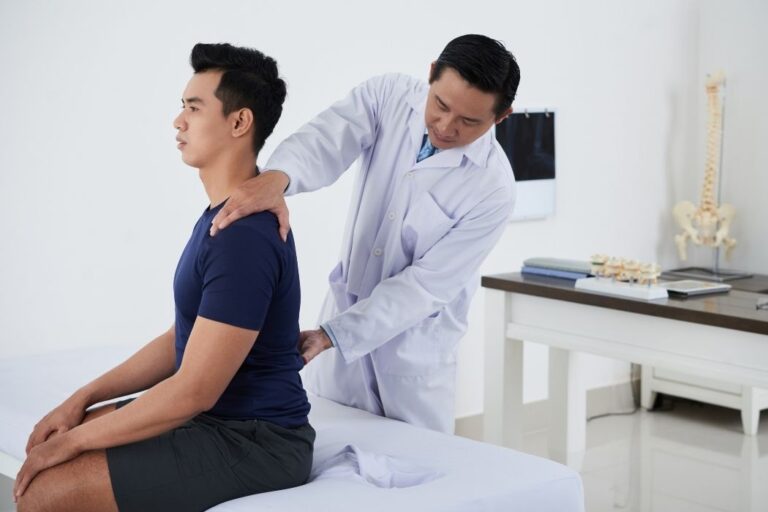
Spinal movement, tenderness, posture, nerve tension tests, reflexes, sensation and muscle power in the limbs.
Imaging, if needed
X-ray or MRI may be advised where the findings suggest nerve compression, fracture, instability or when symptoms are not improving as expected.
Your treatment plan
The plan is matched to the diagnosis, severity, your work and activity needs, and what is realistically likely to help.
Patient Questions
Spine and back pain FAQs
Choose the topic closest to your concern to see the questions patients ask most often.
What causes lower back pain?
Common causes include muscular strain, disc problems, arthritis of the spine, poor posture, weak core muscles and, less often, fractures or inflammatory conditions. Pain that stays in the back usually has a different cause from pain that travels down the leg.
When should I see an orthopedic back specialist?
Consider an orthopedic consultation if back pain lasts beyond a few weeks, keeps returning, wakes you at night, follows an injury, or is accompanied by numbness, tingling or weakness in a limb.
Do I need an MRI for back pain?
Not usually at the first visit. Many episodes of back pain settle without imaging. An MRI is advised when the examination suggests nerve compression, or when symptoms persist despite proper treatment.
Is walking good for lower back pain?
For most patients, yes. Staying gently active generally helps recovery more than prolonged bed rest. The right amount and type of activity depends on your diagnosis, so ask your doctor before starting a programme.
Why does my back hurt during pregnancy?
Changes in weight distribution, posture and ligament laxity commonly cause lower back and pelvic pain in pregnancy. It is usually managed conservatively with supported exercise and posture guidance.
What is a slipped disc?
A slipped or herniated disc occurs when the soft inner part of a spinal disc pushes outward and irritates a nearby nerve root. It most often affects the lower back, and can cause pain that radiates into the buttock and leg.
Can a slipped disc heal without surgery?
In a large proportion of cases, yes. Many disc herniations improve over weeks to months with medication, physiotherapy and activity modification. Surgery is considered when nerve symptoms are severe, progressive or not settling.
What does sciatica feel like?
Sciatica typically causes pain travelling from the lower back through the buttock and down the back of the leg, sometimes with tingling, numbness or weakness. It reflects irritation of the sciatic nerve rather than a diagnosis in itself.
How long does sciatica take to improve?
Many patients improve substantially within six to twelve weeks of appropriate treatment. Persistent or worsening weakness should be reviewed sooner rather than waiting.
What is lumbar spinal stenosis?
It is narrowing of the spinal canal, usually age-related. The characteristic symptom is leg pain or heaviness that comes on with walking and eases when sitting or leaning forward.
What is cervical spondylosis?
Cervical spondylosis is wear-and-tear change in the discs and joints of the neck. It is very common with age and may cause neck stiffness, pain, headaches, or pain radiating into the shoulder and arm.
Why do I have neck, shoulder and arm pain together?
A nerve root in the neck supplies sensation and power to parts of the shoulder and arm, so compression there can produce symptoms well away from the neck itself. It can also arise from a shoulder problem, which is why examination matters — see our orthopedic overview.
Can a desk job cause neck and back pain?
Prolonged sitting, screen height and repetitive posture are frequent contributors. Workstation adjustment and targeted strengthening often help more than passive treatment alone.
Is neck pain with numbness in the hand serious?
It should be assessed. Numbness or weakness in the hand may indicate nerve root compression in the neck, and progressive symptoms need timely evaluation.
Does back pain always need surgery?
No. The great majority of patients are treated without an operation. Spine surgery is reserved for specific situations such as progressive weakness, persistent nerve compression that has not responded to non-surgical care, instability or fracture.
When is spine surgery recommended?
When the diagnosis is clear, symptoms are significant, non-surgical treatment has been given a fair trial, and the expected benefit of surgery outweighs its risks in your particular case.
Are spinal injections a permanent solution?
Injections are generally used to reduce inflammation and pain so that rehabilitation becomes possible. They are one part of a plan rather than a standalone cure.
Should I use a lumbar belt or back brace?
Bracing has a limited, specific role — for example after certain fractures or surgery. Wearing a belt continuously without medical advice can weaken the muscles that support the spine.
Which doctor treats spine problems at Nishat Hospital?
Spine conditions are assessed by our orthopedic team, with input from neurosurgery, neurology and pain medicine where required. You can view our doctors or call 0522 408 2590.
Which exercises help lower back pain?
Core stability, hip and hamstring flexibility and gradual strengthening are the usual foundations. The correct exercises depend on your diagnosis — the same movement can help one condition and aggravate another, so they should be prescribed rather than copied online.
How long does physiotherapy take to work?
Many patients notice change within a few weeks, though lasting improvement usually needs a consistent programme over a longer period. Our physiotherapy service supervises this alongside your orthopedic review.
What is the best sleeping position for back pain?
Generally a position that keeps the spine neutral — on your side with a pillow between the knees, or on your back with support under the knees. Comfort varies between individuals and diagnoses.
Will my back pain come back?
Recurrence is common if the underlying factors — weak core muscles, posture at work, sudden heavy lifting — are not addressed. Rehabilitation aims to reduce that risk, not just settle the current episode.
Is rehabilitation needed after spine surgery?
Yes, in almost all cases. Structured rehabilitation restores movement, strength and confidence, and the timing is guided by the procedure performed.
Related Orthopedic Care
Spine care within a full orthopedic department
Back pain often sits alongside other musculoskeletal problems. Patients seeing a spine specialist at Nishat Hospital have access to the wider orthopedics and bone joint care department, imaging and rehabilitation under one roof.
Trauma & Fracture Care
Spinal and other fractures after falls, accidents and injury.
Sports Medicine & Arthroscopy
Ligament, tendon and joint injuries from sport and exercise.
Pediatric Orthopedics
Scoliosis, posture and back complaints in growing children.
Persistent back pain deserves a proper diagnosis
Book a consultation for back pain, neck pain, sciatica or a suspected slipped disc at Nishat Hospital, Lalbagh, Lucknow.